“Your immune system is not overreacting. It is miscommunicating.”
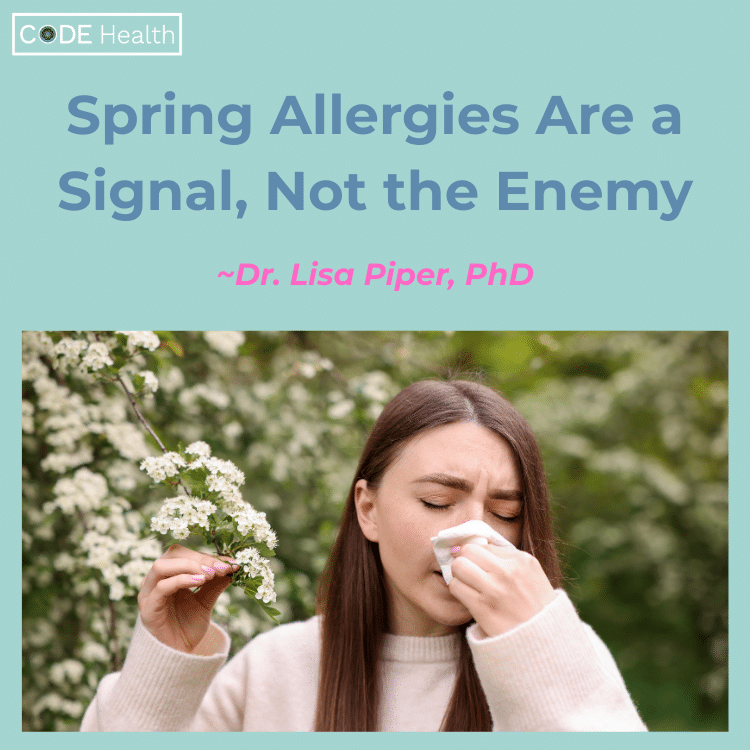
Each year as March unfolds, the pattern begins again. Trees bloom. Grass awakens. The air shifts. And suddenly, families brace themselves for sneezing, congestion, watery eyes, fatigue, and frustration.
Spring allergies have become so common that they feel inevitable.
But what if we reframed the conversation?
What if allergies are not the enemy, but a signal?
What Is Actually Happening During Spring Allergies?
When pollen enters the body, the immune system evaluates it. Ideally, it recognizes it as harmless and moves on.
But when the immune system is already burdened or dysregulated, it may interpret pollen as a threat. The result is a histamine cascade.
This can look like:
- Sneezing
- Runny or congested nose
- Itchy eyes
- Coughing
- Skin irritation
- Brain fog
- Fatigue
The common response is to suppress the histamine reaction. But suppression does not teach the immune system how to interpret the signal differently next time.
And that is the key.
Allergies as Immune Miscommunication
The immune system is not broken. It is confused.
Late winter often leaves the body in a vulnerable state. Reduced sunlight, indoor air stagnation, heavier foods, viral exposure, and stress all create inflammatory load.
By the time pollen arrives, the immune threshold is already low.
The body responds quickly and aggressively, not because it is weak, but because it is overloaded.
Instead of asking, “How do I stop this?” a better question is, “How do I help the body regulate?”
Support Instead of Suppression
Information-based drops offer a different approach.
They do not block receptors.
They do not accumulate in tissues.
They do not sedate the nervous system.
Instead, they support clearer communication within the immune network.
Two foundational tools during allergy season include REACT and PROTECT.
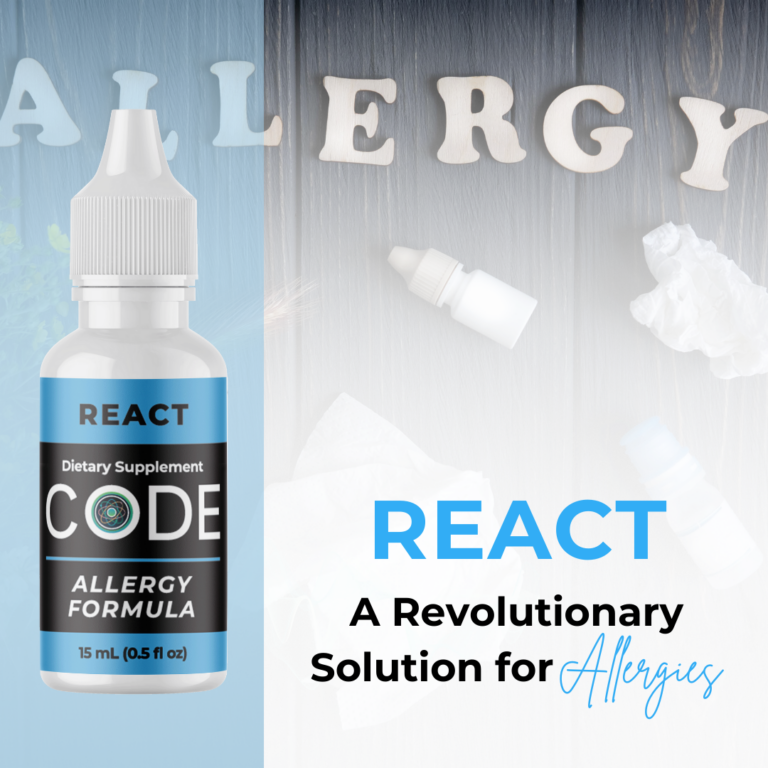
REACT: Supporting Healthy Histamine Response
REACT is designed to support balanced immune signaling during seasonal exposure.
Rather than shutting down histamine pathways, REACT helps the body interpret environmental triggers more appropriately.
It may support:
- Nasal and sinus comfort
- Eye irritation reduction
- Skin sensitivity
- Seasonal respiratory challenges
- Overall immune modulation
REACT is especially helpful when started proactively before peak pollen counts.
One sublingual drop at a time allows the body to respond without overwhelm.
PROTECT: Strengthening Immune Adaptability
PROTECT supports the body’s ability to adapt to environmental stressors.
When used daily during seasonal transitions, PROTECT may help:
- Support immune readiness
- Maintain inflammatory balance
- Promote adaptability to new exposures
- Reduce susceptibility during high pollen days
Together, REACT and PROTECT offer both modulation and strength.
The Nervous System Factor
What many parents and adults do not realize is that stress amplifies allergic responses.
When the nervous system is in fight-or-flight mode, inflammatory responses intensify. Histamine release becomes more reactive.
Supporting nervous system regulation can make a meaningful difference.
CALM is often used alongside allergy support to promote parasympathetic balance and emotional steadiness during seasonal shifts.
Better regulation means better resilience.
Supporting the Whole System
Sometimes allergies are part of a broader pattern.
If inflammation is high, consider foundational support with BALANCE to enhance cellular communication and mitochondrial efficiency.
For those experiencing respiratory discomfort, BREATHE may provide additional seasonal support.
If environmental exposure feels overwhelming, CALM can help maintain internal clarity.
When allergies disrupt sleep, DREAM can support restorative rest.
If inflammatory discomfort accompanies seasonal shifts, RELIEF may be an appropriate addition.
Every system communicates. When one is strained, others compensate.
A Proactive Spring Protocol
Rather than waiting for symptoms to escalate:
Three to four weeks before peak pollen:
Begin daily REACT and PROTECT am and pm.
Support hydration, outdoor light exposure, and consistent sleep.
At first signs of irritation:
Increase REACT as needed.
Continue PROTECT daily.
Support nervous system regulation with CALM if needed.
Preparation often reduces severity.
Why This Matters for Families
In most households, women lead seasonal health decisions.
They notice the early sniffles.
They track the fatigue.
They want solutions that are gentle, sustainable, and intelligent.
Spring should be a time of renewal, not sedation.
When we shift from suppression to communication, we allow the immune system to learn, adapt, and strengthen.
What’s Next?
If spring allergies are part of your yearly pattern, consider preparing differently this season.
Support the signal.
Strengthen resilience.
Regulate, do not suppress.
Start with REACT and RESILIENCE. Add CALM if stress is high. Support the foundation with BALANCE.
One drop at a time.