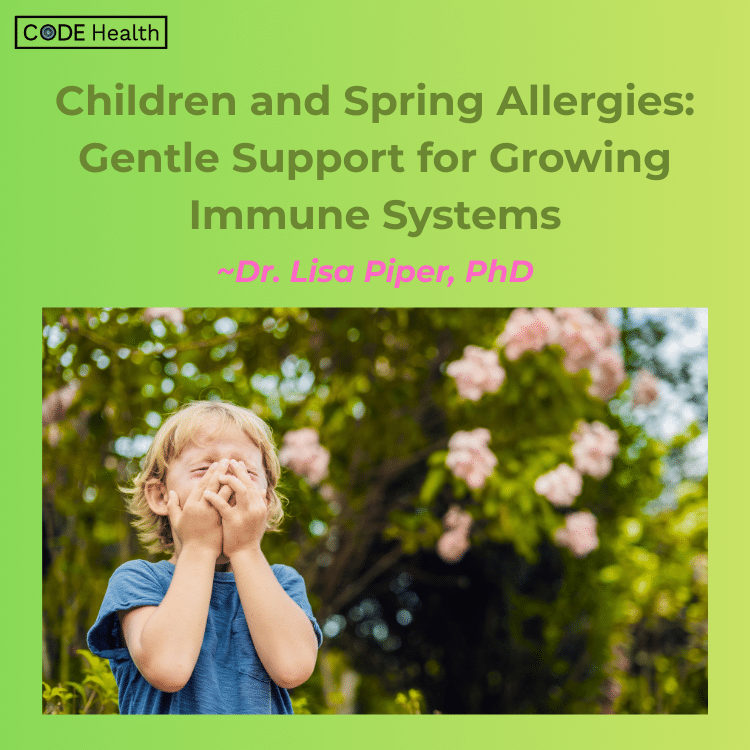
“Children don’t need stronger medicine. They need clearer signals.”
As spring approaches, many parents brace themselves for what they know is coming. Sneezing. Runny noses. Itchy eyes. Interrupted sleep. Irritability. Brain fog.
For many families, spring allergy season has become predictable and disruptive.
But as a doctor of natural medicine, I want to gently reframe something important:
Allergies are not a malfunction. They are a miscommunication.
And for growing children, communication is still developing.
Why Children Experience Spring Allergies
Children’s immune systems are learning every day. Each season introduces new environmental exposures. Pollen, grasses, mold spores, shifting temperatures, increased outdoor play.
When the immune system misinterprets these environmental signals as threats, it triggers a histamine response.
This can look like:
- Sneezing and congestion
- Watery or itchy eyes
- Coughing
- Skin irritation
- Fatigue or irritability
- Difficulty concentrating
The conventional approach often involves suppressing this response. While that may reduce symptoms temporarily, it does not teach the immune system how to respond more intelligently.
And children deserve support that respects their development.
Suppression vs Support
Many over-the-counter allergy medications work by blocking histamine receptors. The result may be less sneezing, but often at the cost of:
- Drowsiness
- Emotional flattening
- Reduced focus
- Disrupted sleep cycles
- Behavioral shifts
Parents frequently report that their child feels “not quite themselves.”
Instead of asking how to shut the immune system down, a better question might be:
How do we help the immune system regulate?
This is where gentle, information-based support becomes valuable.
Supporting Growing Immune Systems with Clear Signals
Children’s bodies are highly responsive. They do not need force. They need clarity and direction.
Information-based drops are designed to communicate with the body’s existing signaling systems rather than override them.
Because they are not dose-driven and do not accumulate in the body, they offer a subtle approach that many parents feel comfortable using.
Two foundational tools for spring preparation include:
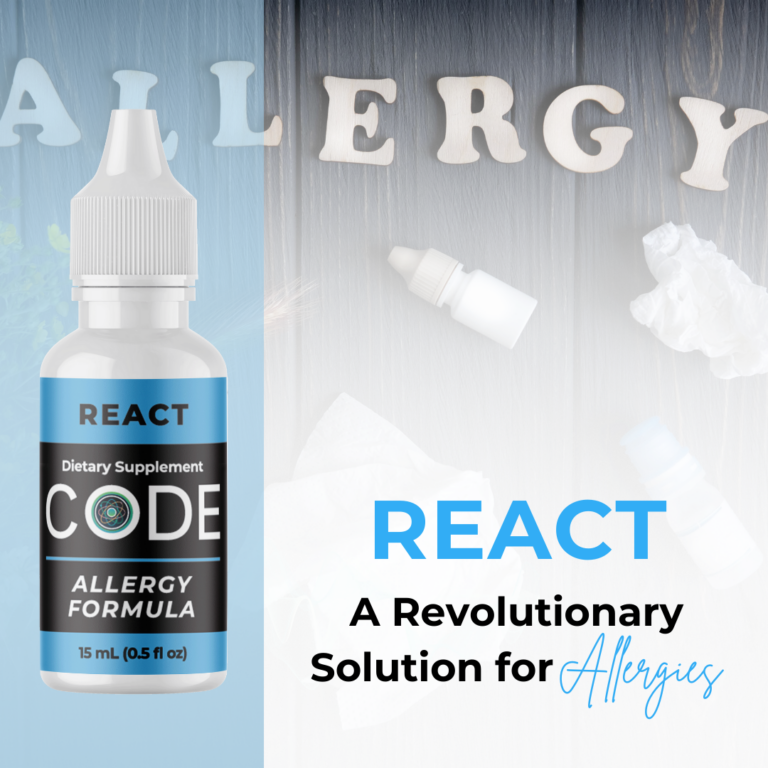
REACT: Supporting Healthy Histamine Response
REACT is formulated to help the body modulate allergic patterns and histamine signaling.
Instead of suppressing the immune response, it supports the body in responding more appropriately to environmental triggers.
Parents often use REACT:
- A few weeks before pollen season begins
- At the first sign of sneezing or congestion
- During peak outdoor exposure days
- Before travel to new climates
One sublingual drop at a time allows the body to interpret the signal without overwhelm.
PROTECT: Proactive Immune Support
Spring allergies often appear when the immune system is already taxed.
Late winter brings lower sunlight exposure, indoor air stagnation, and increased viral exposure. By the time pollen arrives, children may already be depleted.
PROTECT is often used proactively to support immune strength and overall adaptability.
It helps maintain a stable internal environment so that seasonal shifts do not trigger exaggerated responses.
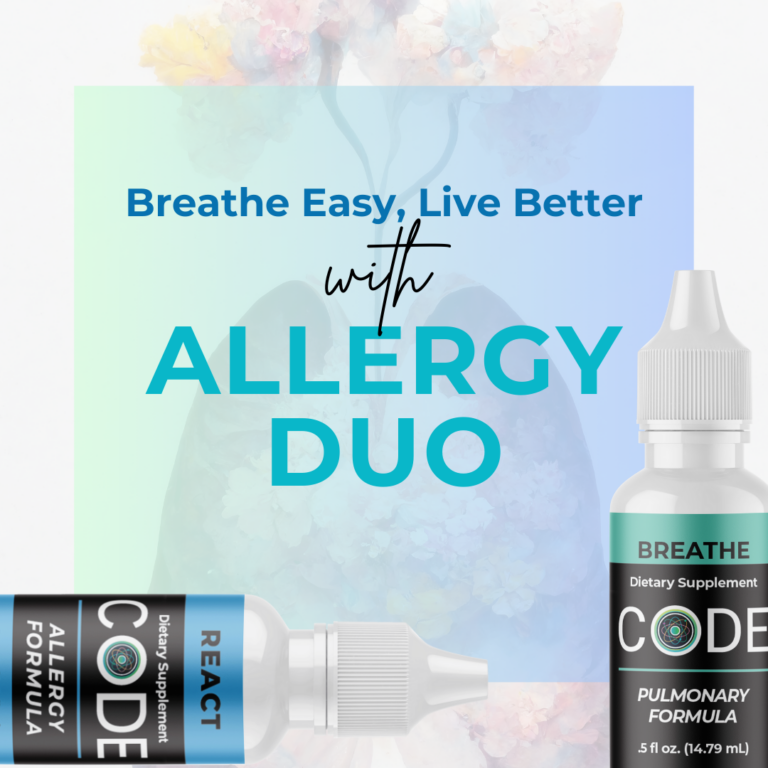
When used together, REACT and PROTECT support both modulation and strength.
The Role of the Nervous System in Allergies
One often overlooked factor in children’s allergies is stress.
Even subtle stressors such as:
- School transitions
- Sleep disruptions
- Emotional overwhelm
- Changes in routine
can heighten inflammatory responses.
A dysregulated nervous system amplifies immune reactivity.
Supporting calm and consistent sleep patterns during allergy season can dramatically improve resilience. This is where CALM and DREAM formulas are supportive in addition to REACT and PROTECT.
Children do not separate emotional stress from physical symptoms. Their systems process everything at once.
This is why holistic support matters.
A Gentle Spring Preparation Plan for Families
Rather than waiting for symptoms to escalate, consider preparing early.
3–4 Weeks Before Peak Pollen
- Begin PROTECT daily to strengthen immune adaptability.
- Support hydration and outdoor play in natural sunlight.
- Prioritize consistent bedtime routines.
At the First Sign of Symptoms
- Introduce REACT sublingually.
- Continue PROTECT.
- Reduce inflammatory foods if needed.
- Encourage nasal saline rinses or steam showers.
During High Pollen Days
- Shower after outdoor play.
- Change clothes immediately upon entering the house.
- Use an air purifier in sleeping areas.
- Continue REACT support.
The goal is not to eliminate exposure. It is to help the body respond appropriately.
Why Mothers Lead This Shift
In most households, it is mothers who notice subtle changes first.
The extra sniffle.
The dark circles under the eyes.
The mood shift after recess.
Women are often the gatekeepers of the medicine cabinet. They are looking for options that are:
- Non-toxic
- Gentle
- Sustainable
- Developmentally appropriate
- Supportive rather than suppressive
Information-based drops align with that desire.
They do not force.
They inform.
They respect the intelligence of a growing body.
What This Means for Your Family
Spring should be a season of expansion, not exhaustion.
Children should be able to run outside, breathe deeply, and sleep peacefully.
By preparing early and choosing support that honors immune development, you give your child more than symptom relief. You give them a stronger foundation for long-term resilience.
What’s Next?
If spring allergies have been part of your family’s yearly cycle, consider approaching this season differently.
Prepare before pollen peaks.
Support rather than suppress.
Communicate clearly with the body.
One drop at a time.