Most people only hear about iodine when the thyroid is mentioned. That is where the conversation usually stops. But iodine is not limited to the thyroid.
Cells throughout the body use iodine to support communication, energy production, and glandular function. When levels begin to fall, the effects do not always appear right away on standard lab tests. Systems simply start to lose efficiency. Hormonal signaling becomes less stable. Immune defenses can weaken. Energy production inside cells slows down.
That is why iodine has often been described as a foundational mineral rather than just a thyroid nutrient.
Listen to this podcast now at C3 Podcast or join us on Apple Podcasts or Spotify.
Why Iodine Was Historically Called the “Master Mineral”
Iodine did not always sit in the narrow category of “thyroid nutrient.” Earlier work in nutrition and natural medicine described it very differently. It was seen as a mineral that supported the entire glandular system.
The thyroid is only one piece of that system. Other glands also rely on iodine to support signaling and coordination across the body. Immune tissues, reproductive organs, and metabolic pathways all interact with iodine in different ways.
Iodine also gained that reputation because of how it behaves chemically in the body. It can interact with compounds that create stress for cells, including certain pathogens and environmental toxins.
These roles helped shape the idea of iodine as a “master mineral,” one that supports communication across the body rather than serving a single organ.
Molecular Iodine vs Iodized Salt
Confusion around iodine often starts with the forms it comes in.
The iodine added to table salt is iodide. That form is mainly used by the thyroid to produce thyroid hormones that regulate metabolism.
Molecular iodine, written as I2, works differently. Many tissues throughout the body can use it directly. Skin, immune cells, and glandular tissues all interact with iodine in ways that go beyond thyroid hormone production.
This difference matters. Relying only on iodized salt may support the thyroid, but it does not necessarily provide the form of iodine many other tissues use.
Environmental Halogens That Compete With Iodine
Iodine status is not influenced by diet alone. The modern environment also plays a role.
Several elements share a similar chemical structure with iodine. These elements belong to a group known as halogens. Fluoride, chlorine, and bromide are among the most common.
Because they look chemically similar, the body can mistake them for iodine. When these halogens occupy receptor sites in tissues, iodine may have a harder time entering cells where it would normally be used.
These exposures are part of everyday life. Chlorine and fluoride are commonly added to municipal water supplies. Bromide compounds have historically appeared in certain breads and processed foods.
When exposure accumulates, these competing elements can interfere with how efficiently iodine is used throughout the body.
Why Selenium Matters When Supporting Iodine
Iodine rarely works in isolation inside the body. Several minerals interact with it, and selenium is one of the most important.
Enzymes that regulate thyroid hormone activity depend on selenium to function properly. These enzymes help convert and balance thyroid hormones once iodine has entered the system.
Without enough selenium, iodine metabolism can become less efficient. The body may struggle to regulate thyroid signaling the way it normally would.
This relationship highlights a broader principle in nutrition. Minerals often operate as networks rather than isolated nutrients.
How Cooking Methods Can Create Compounds Linked to Aging
Diet conversations usually focus on ingredients. But the way food is prepared can change its chemistry in ways many people overlook.
When foods are exposed to high dry heat, chemical reactions can occur between sugars and proteins. These reactions form compounds known as advanced glycation end products, often shortened to AGEs.
Cooking methods such as frying, roasting, grilling, and baking tend to generate higher levels of these compounds.
Over time, AGEs can accumulate in tissues and place stress on cellular structures. Research has linked them to inflammation, oxidative stress, and changes in collagen integrity.
Cooking with moisture tends to produce fewer glycation compounds. Methods such as steaming or pressure cooking help limit these reactions while preserving nutrients.
Cooking methods can change the chemistry of food more than most people realize.
The Larger Pattern Behind Modern Mineral Deficiency
Mineral intake today looks very different from what people consumed even a few generations ago.
Food systems have changed. Soil composition has shifted in many regions. Processing methods remove or alter nutrients before food reaches the plate.
At the same time, environmental exposures have increased. Elements that compete with essential minerals appear in water systems, food processing, and industrial environments.
These factors do not always produce immediate deficiency symptoms. Instead, small inefficiencies can develop across biological systems that depend on those nutrients.
Over long periods, these subtle shifts may influence how well cells communicate, repair, and maintain normal function.
Bringing It Together
Looking at iodine through a broader lens changes how the mineral is understood in modern health conversations. Rather than being limited to thyroid hormones, iodine participates in cellular communication, glandular signaling, and metabolic regulation throughout the body.
Environmental exposures, dietary shifts, and modern cooking practices all influence how these systems operate. These interactions show why mineral balance continues to matter for long term health.
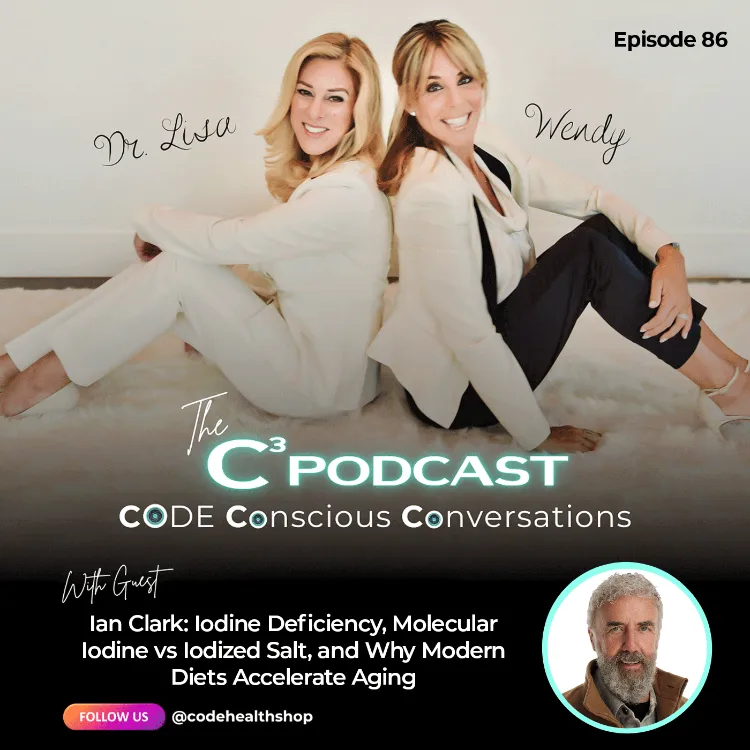
These ideas are explored further in the latest episode of C3 Podcast: CODE Conscious Conversations with natural health entrepreneur Ian Clark. He is the founder of Activation Products. After receiving a severe health prognosis, he spent years researching nutrition and recovery strategies.
New Episode:
Ian Clark: Iodine Deficiency, Molecular Iodine vs Iodized Salt, and Why Modern Diets Accelerate Aging
Listen now on Apple Podcasts and Spotify!
Learn More About Ian Clark:
Website: http://activationproducts.com
Instagram: @activationproducts
TikTok: @ianactivated
LinkedIn: @ianmclark
Facebook: @IanClarkActivation
Here is our Affiliate link to ACTIVATION so we can start the New Year off by always having the link as part of what I send to you: activationproducts.com/code, discount coupon: CODE for 10% off at checkout.
Listen to this podcast now at C3 Podcast or join us on Apple Podcasts or Spotify.