Your body responds to information long before it responds to chemistry. Every emotion, every choice, every breath, and every subtle shift in your inner environment sends a message to your cells. Yet one signal stands above all the others. Oxygen is not only the fuel of life. It is a form of biological information that helps the body organize itself, repair itself, and return to coherence. When oxygen enters a cell, it does far more than support energy production. It tells the body that it is safe, stable, and ready to operate at its highest potential.
For most of us, this understanding is new. We believe that if we are breathing, we must be oxygenated. We assume that everyday inhalation naturally delivers everything the body needs to function. Yet millions of people live in a state of low oxygenation without realizing it, because the problem is not the breath itself. The real question is how much oxygen actually reaches the tissues. When cellular oxygen begins to drop, the body compensates silently. Energy fades, clarity becomes inconsistent, inflammation increases, and recovery slows, often long before symptoms appear.
The modern world has accelerated this shift. Chronic stress compresses the breath. Indoor living restricts exposure to natural air. Sedentary routines limit circulation. And as we age, cellular oxygenation declines steadily. This combination creates a baseline that our ancestors never had to navigate. The result is a quiet biological deficit that influences nearly every system in the body.
Today we explore a powerful solution that is reshaping how oxygen enters the cells and how the body restores its vitality. Oxygen nanobubbles represent a new frontier in wellness, because they deliver oxygen directly through the skin, bypassing the limitations of the lungs and reaching tissues that traditional breathing cannot. This approach strengthens cellular communication, supports mitochondrial function, and brings the body closer to its natural blueprint of health.
This is where healing begins to change. Not through force, but through information. Not through chemicals, but through communication. And oxygen is one of the clearest signals the body understands.
Listen to this podcast now at C3 Podcast or join us on Apple Podcasts or Spotify.
Why Modern Oxygen Levels Are Declining
Many people wonder why they feel tired despite sleeping, eating well, or even exercising regularly. The answer often comes down to oxygen. Stress shortens the breath. Indoor air has lower oxygen concentration than natural outdoor environments. Posture limits lung expansion. And busy, overstimulated lifestyles prevent the deep breaths that nourish the bloodstream.
Over time, these small factors accumulate. The breath becomes shallow. Circulation slows. Tissues receive less oxygen than they need to function optimally. Even when we inhale enough air to survive, we may not be receiving enough to thrive. This is especially true as we age. Muscle tissue gradually loses oxygen saturation, a phenomenon often described as the hypoxic curve. Oxygen delivery declines as vessels stiffen and mitochondria weaken. The result is a cascade of changes that influence metabolism, cognition, hormonal balance, and immune resilience.
The most surprising realization is that oxygen loss is not always noticeable. It reveals itself through subtle signals: slower recovery, brain fog, lower motivation, or a sense that the body simply does not respond the way it once did. These signs are not random. They are communication signals from cells that are trying to adapt to limited oxygen.
Recognizing this pattern is the first step toward rebuilding energy from the ground up.
Why Lung-Based Oxygen Delivery Has Limits
Breathing is essential, yet the lungs are only one pathway for oxygen. Traditional therapies like breathwork, hyperbaric chambers, and EWOT deliver value by increasing oxygen concentration in the lungs and bloodstream. However, they share the same limitation. They depend entirely on lung function, blood flow, and pressure. If circulation is restricted or tissues are inflamed, oxygen may never reach the areas that need it most.
This is why so many individuals benefit from breathwork yet still feel like something is missing. The challenge is not the technique. It is the pathway. Some tissues, especially those compromised by age or inflammation, simply cannot receive the oxygen they need through the lungs alone. This creates a gap between biological demand and physiological supply.
Nanobubble oxygenation closes that gap.
How Nanobubble Oxygenation Works
Nanobubbles are microscopic spheres of oxygen, each less than 0.1 microns in size. A human skin pore is roughly 25 microns across. This means nanobubbles are hundreds of times smaller, allowing them to move through the dermal layers with ease. When the body is immersed in water infused with these oxygen nanobubbles, the oxygen does not rely on the lungs. It passes through the skin, enters the soft tissues, and disperses into the bloodstream.
Once inside, the oxygen moves toward areas of lower concentration, following natural gradients that guide it to cells in need. This direct, transdermal path makes oxygen more accessible to muscles, nervous tissue, and areas with compromised circulation. Because the delivery is consistent and gentle, tissues begin to replenish oxygen levels in ways that feel natural to the body.
The result is meaningful and measurable. Muscle oxygen saturation increases. Recovery accelerates. Inflammation softens. Cognitive clarity improves. And the entire system begins to operate with greater coherence because the cells are finally receiving the element they rely on most.
How Oxygen Moves Through the Skin and Into the Cells
When nanobubble-oxygenated water comes into contact with the skin, the bubbles disperse almost immediately. Their small size allows them to slip between lipid layers and pass through the epidermis. Once inside the dermis, they dissolve into the interstitial fluid, where they become available to surrounding tissues.
This direct entry into soft tissue differentiates nanobubbles from traditional oxygen therapies. Instead of depending on the bloodstream to reach each organ, oxygen becomes available immediately in the areas immersed in the water. From there, it gradually moves into the circulatory system and spreads throughout the body.
As the oxygen reaches the mitochondria, the effects become even more profound. Mitochondria rely on oxygen for oxidative phosphorylation, the final stage of ATP production. Without adequate oxygen, this process slows, reducing the energy available for movement, repair, detoxification, and cellular signaling. When oxygen rises, ATP rises with it. The body becomes more efficient, more responsive, and more capable of adapting to stress.
This is the foundation of cellular vitality.
Why Oxygen Declines With Age
Every decade of life brings a gradual reduction in tissue oxygenation. Blood vessel flexibility decreases, circulation slows, and mitochondrial function becomes less efficient. These changes accumulate beneath the surface, often unnoticed until fatigue or inflammation becomes more persistent.
Low oxygen creates biological friction. The body begins to work harder to perform the same tasks. Recovery times increase. Neural pathways lose efficiency. Hormonal rhythms become irregular.Yet these effects are not irreversible. When oxygen levels are restored, even partially, the body begins to reorganize. Muscles respond more quickly. Mood improves. Cognitive clarity returns. The body behaves as if it has been given access to a resource it had been quietly missing.
Nanobubbles offer a way to restore this access in a way that feels natural and sustainable.
Why Nanobubble Oxygenation Complements Breathwork and Hyperbaric Therapy
Each oxygen strategy serves a purpose. Breathwork strengthens lung capacity and calms the nervous system. Hyperbaric therapy increases partial pressure to push oxygen into the bloodstream. EWOT combines movement with oxygen supplementation for performance benefits.
Nanobubbles complement these practices by offering a different route of entry. Instead of relying on air pressure and lung capacity, the oxygen travels directly through the skin. This makes the therapy accessible for people who cannot tolerate hyperbaric pressure, including those with ear sensitivity, sinus issues, or certain neurological conditions.
Nanobubbles also work in a shorter session time, making them practical for individuals with limited schedules. Their gentle delivery aligns with the body’s natural processes, supporting daily vitality without overwhelming the system.
This synergy reflects the philosophy of intelligent, efficient healing that responds to the body’s communication patterns rather than forcing a chemical or mechanical intervention.
Oxygen, Water, and Light: A Foundational Healing Triad
Cellular health unfolds through relationships. Water structures the environment inside and around each cell, shaping the way information travels. Light activates biochemical pathways, influences circadian rhythms, and supports mitochondrial function. Oxygen powers the entire system, providing the energy needed for cellular movement, repair, and detoxification.
When these three elements are present in the right balance, the body enters a state of coherence. Cells communicate more effectively. Inflammation begins to resolve. Tissue repair accelerates. And the internal environment becomes more stable.
Nanobubble oxygenation enhances this triad by delivering the oxygen signal more directly, making every other supportive practice more effective. Breathwork, hydration, sunlight exposure, nutrient intake, and Information Medicine all respond positively when oxygen is abundant.
This is the essence of synergy. Each element amplifies the others, creating a foundation for healing that feels both scientific and intuitive.
What People Are Experiencing With Transdermal Oxygen
When oxygen becomes more accessible, its effects ripple throughout the body. Many individuals report faster muscle recovery, improved athletic performance, and reduced inflammation. Others experience clearer thinking, improved mood, or fewer symptoms of brain fog. For some, oxygen supports wound healing, tissue regeneration, or relief from chronic skin conditions such as acne, eczema, or psoriasis.
These changes arise not from forcing the body into a new state, but from giving it the information it needs to reorganize. Oxygen is a signal that enhances communication. Once the cells are able to receive that signal, the body begins to function in ways that often feel more natural, more efficient, and more aligned with how the system was designed to operate.
Why Daily Habits Still Matter
Nanobubbles provide a powerful form of oxygenation, yet daily habits continue to shape the baseline of cellular health. Breath quality, movement, light exposure, and hydration all influence how oxygen moves through the body. When we step outdoors for a few intentional breaths, circulation increases and the diaphragm expands. When we move, vessels open and blood flow improves. When we hydrate consistently and expose ourselves to natural light, cellular signaling strengthens.
The more we support these foundational elements, the more receptive the body becomes to additional oxygen-based interventions. Healing is not a single action but a pattern of communication. Small daily choices create the conditions for long-term vitality.
10 FAQ: Oxygen, Cellular Signaling, and Nanobubbles
Why does breathing not guarantee full oxygenation?
Because oxygen must reach the tissues, not just the lungs.
How do nanobubbles enter the body?
Their microscopic size allows them to pass through the dermal layers and into soft tissue.
Why does oxygen decline with age?
Circulation slows, vessels stiffen, and mitochondrial activity decreases.
Can transdermal oxygen support mitochondria?
Yes. Oxygen is the final ingredient needed for ATP production.
How is this different from hyperbaric therapy?
Nanobubbles deliver oxygen without pressure and often in less time.
Is this approach suitable for most people?
Yes. It is gentle, noninvasive, and does not rely on lung capacity.
Does it help with recovery?
Improved oxygenation supports repair, reduces inflammation, and restores energy.
Can oxygen influence the skin?
Higher oxygen levels help calm irritation and reduce anaerobic bacteria.
How long does a session take?
Most sessions last thirty to forty-five minutes and often have residual effects.
Can it integrate with other wellness practices?
Yes. It works synergistically with hydration, light exposure, breathwork, and Information Medicine.
Practical Takeaways:
Strengthening Cellular Communication
- Notice when your body signals low oxygen
- Step outside for slow, intentional breaths
- Use movement to open circulation and support tissue flow
- Choose habits that restore oxygen instead of draining it
- Rebuild your baseline through small, consistent practices
Your cells are always communicating. They move toward coherence when oxygen becomes available and the internal signal becomes clear.
Listen to the Full Episode
For a deeper exploration of oxygenation, cellular communication, mitochondrial energy, and transdermal nanobubble therapy, listen to the full episode:
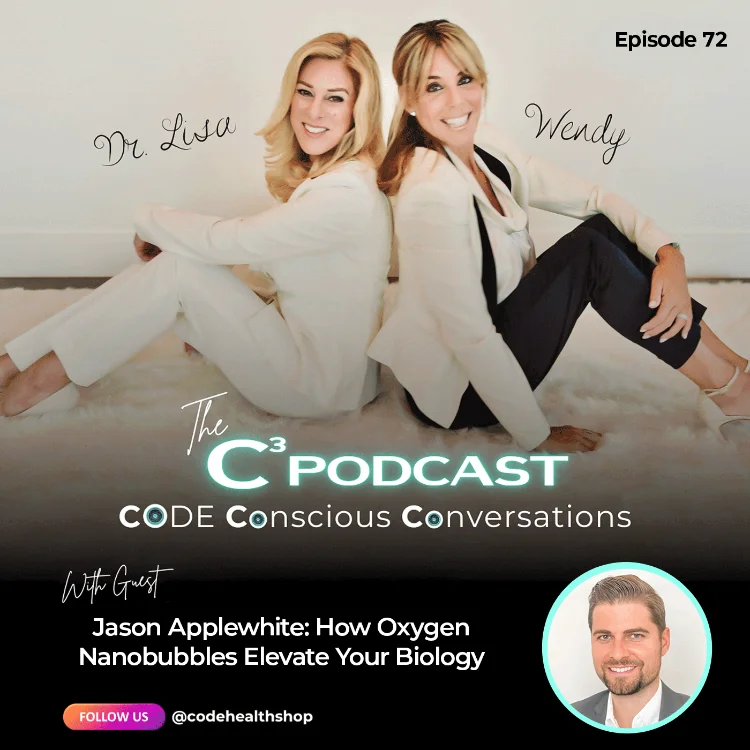
Episode 72. Jason Applewhite: How Oxygen Nanobubbles Elevate Your Biology
Listen to this podcast now at C3 Podcast or join us on Apple Podcasts or Spotify.