Chronic migraines, insomnia, anxiety, and burnout are frequently approached as isolated diagnoses. One specialist appointment leads to another, tests return normal, medications are layered in, and yet many people continue to feel worse instead of better.
What often remains unexamined is the pattern beneath the symptoms. When the nervous system has been operating in survival mode for too long, it can manifest as pain, disrupted sleep, emotional volatility, and persistent fatigue.
The body is responding to the environment it believes it is in.
Listen to this podcast now at C3 Podcast or join us on Apple Podcasts or Spotify.
When Symptom Management Misses the Root
In conventional medicine, care is often organized by specialty. Headaches go to neurology. Chest pain goes to cardiology. Dizziness moves between ENT and cardiology. Each system is evaluated in isolation.
The challenge is that people do not live in compartments. When imaging is normal and labs look fine, patients are told they are okay. Many leave feeling unheard. It is not uncommon for someone to walk into a clinic and say, “I’m not crazy,” before anything else is discussed.
That statement carries years of frustration. It reflects what happens when symptoms are measured but not understood in context.
Migraines Through a Nervous System Lens
Migraine care traditionally focuses on frequency, severity, triggers, and medication response. Those factors matter.
But the question that changes everything is simple. What else is happening in your life?
Sleep disruption. Relationship strain. Work stress. Lack of support. Chronic overextension. These are not side notes. They are inputs into the nervous system.
If the nervous system remains on high alert, migraine pathways can become more reactive. Pain circuits become sensitized, lowering the threshold for activation even in the absence of structural findings.
Medication may reduce intensity for a time, but it does not recalibrate the system that keeps firing.
Trauma and the Body’s Protective Split
Trauma does not need to be conscious to affect the body. It can remain encoded in autonomic patterns.
When the nervous system perceives threat, it shifts into fight or flight. In overwhelming moments, it may also disconnect from emotional processing to protect survival. That protective split can remain long after the original event has passed.
Over time, suppressed emotion and unprocessed stress can surface as physical symptoms. Chest pressure. Throat tightness. Chronic tension. Sleep disturbances. The body expresses what the mind has compartmentalized.
This does not require reliving the event. It requires restoring enough autonomic balance for the nervous system to soften its grip.
Survival Mode and Chronic Burnout
The nervous system is wired to protect survival. When high alert becomes the baseline, cortisol remains elevated, recovery shortens, and repair slows. Over time, this blunts natural recovery rhythms and narrows the body’s capacity to return to baseline.
Living in constant performance mode compounds the issue. Many people move through the day adjusting themselves to environments, filtering their responses, staying vigilant. That ongoing self monitoring drains regulatory capacity.
As parasympathetic tone diminishes, restorative sleep is reduced, pain sensitivity increases, and fatigue becomes persistent because the body remains in energy-conservation mode under perceived threat.
The Role of Breath, Meditation, and Hypnosis
Regulation is not achieved through cognition alone. It is experienced through the body.
- Breathwork and Autonomic Reset
Breathwork is not just calming. It is regulatory. By slowing and guiding the breath, you directly influence the autonomic nervous system. Intentional breathing patterns help shift the body out of sympathetic overdrive and into a parasympathetic state associated with safety.
Over time, consistent breath practice creates a reliable pathway back to balance when you feel triggered or overwhelmed.
- Meditation and Awareness of Internal Patterns
Meditation builds the capacity to observe rather than react. As awareness deepens, you begin to notice when the nervous system tightens, when thoughts loop, or when emotional patterns repeat.
That awareness creates space between stimulus and response.
Instead of being driven by old programming, you can pause, redirect, and gradually retrain your system toward regulation. The practice becomes less about escaping stress and more about recognizing it early and responding differently.
- Hypnosis and Subconscious Repatterning
Hypnosis works in a natural altered state that people enter every day without realizing it. It is similar to becoming absorbed in a book or driving on autopilot. In that receptive state, subconscious patterns are more accessible. Rather than analyzing trauma cognitively, hypnosis allows new safety signals to be introduced at a deeper regulatory level.
The goal is not to relive past events but to shift how the nervous system encodes and responds to them moving forward.
These practices do not bypass biology. They engage the mechanisms that already exist within it.
With repetition, they strengthen the nervous system’s sense of safety, allowing the body to exit chronic survival mode. As regulation improves, pain sensitivity, sleep architecture, emotional stability, and relational patterns begin to recalibrate from the inside out.
Co Regulation and Shared Nervous System States
Nervous systems continuously influence one another. States of high alert tend to attract and reinforce similar patterns, while dysregulated systems can amplify tension in those around them.
Regulation works the same way. When safety is present, it spreads. A calm, regulated person can shift the physiology of an entire room. Healing rarely happens in isolation. More often, it unfolds through connection.
When regulation is restored internally, attention naturally shifts outward toward connection and contribution.
Bringing It Together
A nervous system that has been living in survival mode will continue to express that state until it experiences consistent safety. Migraines, insomnia, anxiety, and burnout are signals that regulation has been lost.
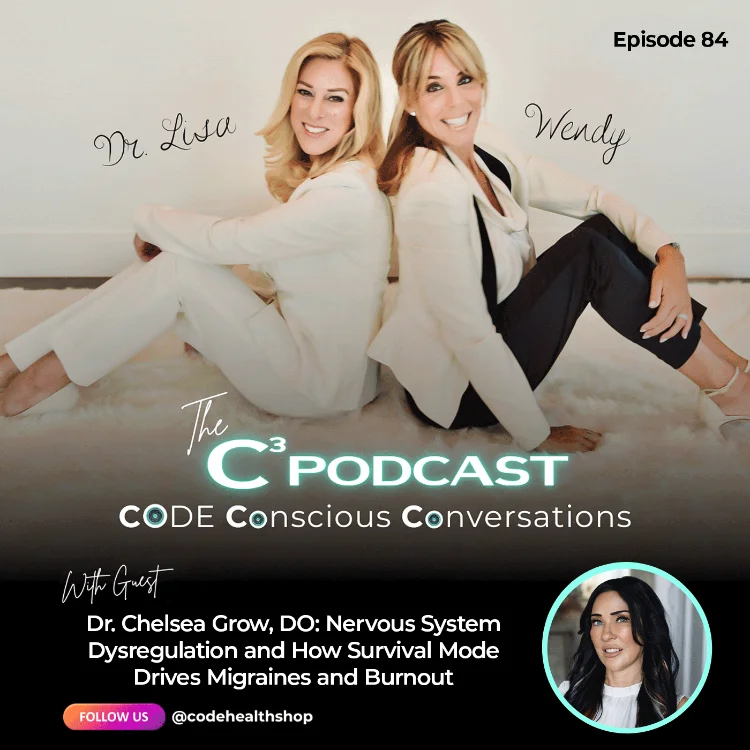
In this episode of C3 Podcast: CODE Conscious Conversations, we explore these ideas with neurologist Dr. Chelsea Grow, DO.
We dive into:
– How nervous system dysregulation drives chronic migraines and burnout
– Why patients feel dismissed when tests are normal
– How breathwork, meditation, and hypnosis help retrain safety signaling
Learn More About Dr. Chelsea Grow, DO:
Instagram: www.instagram.com/theneurodoc_
LinkedIn: https://linkedin.com/in/dr-chelsea-grow-a33471149
Listen to this podcast now at C3 Podcast or join us on Apple Podcasts or Spotify.