Fatigue that does not lift. Brain fog that turns simple tasks into effort. Joint discomfort that moves from one area to another. Standard labs return within range, showing no signs of infection, autoimmune disease, or structural abnormality.
Yet symptoms continue.
Normal bloodwork doesn’t always mean normal physiology. That assumption is incomplete.
Inflammation doesn’t always present as a dramatic spike on a lab panel. It can exist as ongoing immune signaling beneath conventional thresholds. When a medical device remains in the body for years, the immune system does not ignore it. It continues to monitor and respond.
Understanding this requires shifting from a single disease lens to an inflammatory load model.
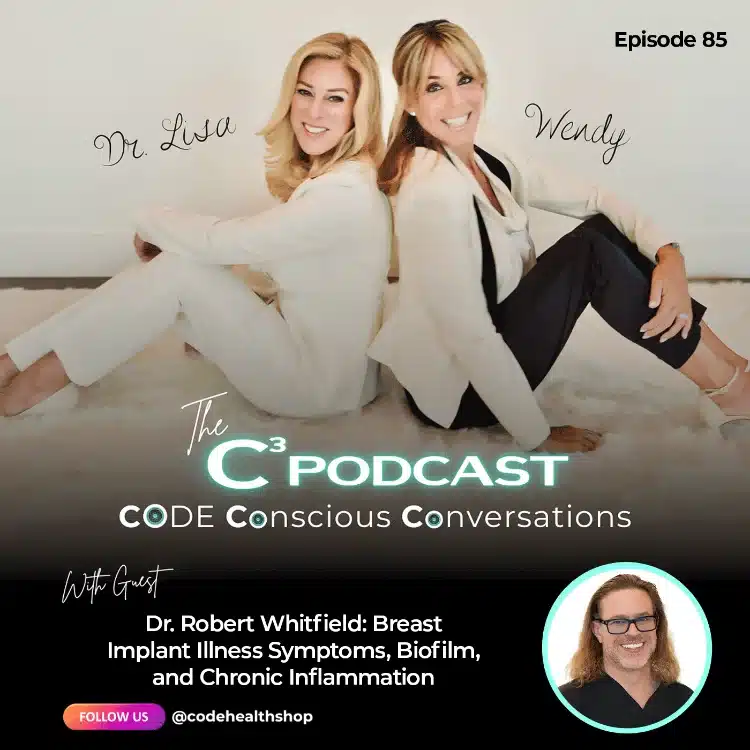
Listen to this podcast now at C3 Podcast or join us on Apple Podcasts or Spotify.
Chronic Inflammation After Breast Implants
Breast implant illness is often discussed as if it were a single condition. A more accurate framework views it as a chronic inflammatory process in which a device may be one contributing factor among several.
Inflammation is shaped by genetics, environmental exposures, overall health status, and cumulative toxic burden. Implants can amplify that terrain when the immune system is already under strain from mold exposure, viral illness, heavy metals, or long standing stress.
The frustration arises because routine evaluations focus on overt pathology. They are designed to detect infection, structural damage, or autoimmune disease. They do not measure subtle immune activation or cellular signaling patterns that accumulate over time.
The Role of Biofilm on Breast Implants
Bacterial biofilm has been identified on implant surfaces in a significant number of explant cases.
Bacteria can attach to an implant and form a protective matrix known as biofilm. This structure resists immune clearance and standard detection methods. Blood tests may not reveal infection because the bacteria are not circulating freely. They are embedded within the capsule.
In a study of over 690 consecutive explant patients, 29 percent showed bacterial contamination, most commonly Cutibacterium acnes and Staphylococcus epidermidis.
Biofilm does not always cause acute infection. It can sustain low grade inflammatory signaling that contributes to systemic symptoms without triggering obvious red flags.
That distinction changes how inflammation is interpreted.
Capsulectomy and Why Complete Removal Is Discussed
When an implant is placed, the body forms scar tissue around it. This capsule is a natural response to a foreign object.
Removing the implant alone may not address the entire inflammatory picture. The capsule can contain bacteria, silicone debris, or inflammatory material. In certain cases, complete capsulectomy allows for culture testing to rule out infection and pathology assessment to exclude malignancy.
There has been concern surrounding capsulectomy, particularly about safety. When performed by a qualified surgeon, it is a standard surgical procedure, with bleeding being the primary risk as in any operation.
The issue is not fear. It is mechanism. If inflammatory material remains, immune signaling may continue.
Genetic Detox Pathways and Inflammatory Resilience
Genetic detox pathways influence how the body manages inflammatory load.
In one clinical cohort, 83 percent of patients showed single nucleotide polymorphisms in detoxification genes. Variants in oxidative stress regulation, methylation, and glutathione pathways can impair the body’s ability to clear toxins and inflammatory byproducts.
MTHFR is one of the more widely recognized genes in this category, but it is not the only one. Vitamin D metabolism also plays a role, with implications for bone density and immune regulation.
When detox capacity is reduced and environmental exposures are high, inflammatory load accumulates more easily. In that terrain, an implant may become an additional signal the immune system must continually process.
Heavy Metals, Heat Exposure, and Implant Materials
All implant shells are made from silicone elastomer. These materials contain compounds and trace elements. Over time, as materials degrade or are exposed to high heat, chemical leaching can occur.
Frequent high heat exposure, such as sauna use, may increase the release of certain compounds from synthetic materials. This process is not melting. It is leaching, in which trace elements migrate from the implant surface.
Microscopic debris does not require a visible rupture to interact with tissue. When foreign particles come into contact with surrounding structures, immune receptors can be activated, sustaining a foreign body response distinct from infection.
Biofilm involves bacteria. Material interaction involves foreign body immune activation.
Fat Transfer After Explant and the GLP-1 Consideration
For patients pursuing fat transfer after implant removal, preparation extends beyond surgery.
Body composition is assessed through DEXA scanning to evaluate lean muscle mass, body fat, and bone density. Nutrition and sleep are addressed before operating. A minimum protein intake of 100 grams daily supports tissue repair and graft survival.
GLP-1 medications require careful consideration. These drugs promote fat loss. When fat is transferred surgically, continued use of GLP-1 agonists can compromise long term graft retention. Discontinuation for a defined period before and after the procedure may protect outcomes.
Surgery does not operate in isolation. Physiological readiness influences recovery, integration, and durability of results.
Preparing the Body for Recovery
Recovery depends on more than surgical technique. Sleep, adequate protein intake, anti-inflammatory nutrition, and reducing exposure to gluten, dairy, and industrial seed oils influence healing.
Preoperative planning may include genetic testing, toxicity burden assessment, gut health evaluation, and hormone review. The goal is not excess testing. It is to lower inflammatory load before introducing surgical stress.
Inflammation is cumulative. Recovery improves when that baseline is reduced.
Bringing It Together
Breast implant illness cannot be reduced to a single diagnosis. It reflects a broader inflammatory pattern shaped by microbial biofilm, detox capacity, environmental burden, and foreign body immune activation. When these layers overlap, symptoms can persist even when routine labs remain within range.
These mechanisms and surgical considerations are explored in depth in C3 Podcast: CODE Conscious Conversations with Dr. Robert Whitfield, MD, a board certified plastic surgeon known for his work in explant surgery and integrative recovery protocols.
Learn More About Dr. Robert Whitfield, MD:
Website: https://drrobertwhitfield.com
Instagram: @dr.robertwhitfield
Tiktok: @robertwhitfieldmd
Youtube: @robertwhitfieldmd
Listen to this podcast now at C3 Podcast or join us on Apple Podcasts or Spotify.